
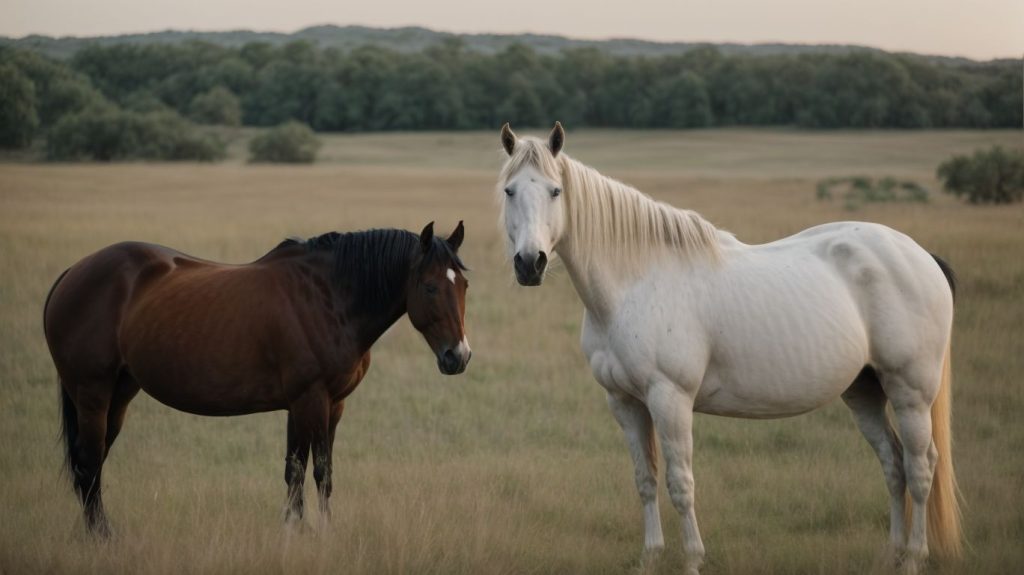
Quarter horses and paints are two distinct breeds of horses that have captivated the hearts of equestrians and enthusiasts alike. In this comprehensive article, we will delve into the differences between quarter horses and paints, exploring their origin, physical characteristics, breeding and registration, performance and uses, color patterns, temperament, popularity, and recognition. We will discuss which horse is better suited for specific purposes such as racing, western riding, trail riding, show events, and overall versatility. We will address the intriguing topic of crossbreeding between quarter horses and paints, exploring the unique qualities of quarabs and pintaloosas. Whether you’re a seasoned horse enthusiast or a curious novice, this article will provide valuable insights into these remarkable equine breeds, helping you to appreciate their individual traits and capabilities. So, saddle up and embark on an enlightening journey through the world of quarter horses and paints.
Key Takeaways:
What Are Quarter Horses and Paints?
Quarter Horses and Paints are two distinct breeds of horse with unique characteristics and histories. The Quarter Horse is known for its versatility and agility, while the Paint Horse is celebrated for its striking coat patterns and color variations.
Quarter Horses are renowned for their muscular build, powerful hindquarters, and compact, solid physique which attributes to their exceptional speed and agility. On the other hand, Paint Horses, known for their splashed and colorful coats, display a combination of white and distinctive color patterns, making them a visual marvel.
What Are the Differences Between Quarter Horses and Paints?
The differences between Quarter Horses and Paints encompass their distinct breed attributes, such as color patterns, conformation, and specific traits unique to each breed.
Origin and History
The origin and history of the American Paint Horse date back to the United States, where its unique coloration and versatile abilities garnered recognition from the American Paint Horse Association (APHA) and equestrian enthusiasts nationwide.
Originally, the American Paint Horse’s lineage can be traced to the horses brought to the New World by Spanish conquistadors. Melding with the Native American Pinto horses, these crossings resulted in the striking coat patterns and strong, agile traits that define the breed today. The distinctive coat patterns, including tobiano, overo, and tovero, have become signature features of the Paint Horse breed, captivating breeders and aficionados alike.
With remarkable intelligence and an innate willingness to work with humans, American Paint Horses quickly gained popularity across various disciplines, from ranch work to competitive showing. The APHA, established in 1965, aimed to preserve and promote these exceptional equines, setting rigorous standards for color and registration to ensure the breed’s integrity.
Physical Characteristics
The physical characteristics of the Paint Horse are defined by its diverse coat patterns, including overo and tobiano, as well as solid-colored variations, contributing to the breed’s captivating appearance and conformation.
Paint Horses display distinctive coat patterns that can range from bold and eye-catching to elegantly subtle. The overo pattern features irregular white markings that often don’t cross the back of the horse, creating a visually striking contrast against a colored base. In contrast, the tobiano pattern showcases bold, sharp-edged white markings that typically cross the back and flow down the legs, adding a sense of dynamic movement to the horse’s appearance.
Some Paint Horses exhibit solid-colored variations, bringing a unique twist to the breed’s overall diversity. These solid-colored individuals may have minimal white markings or even none at all, allowing their captivating base colors to take center stage. The conformation of the Paint Horse, characterized by a balanced and muscular build, perfectly complements these striking coat patterns, making them truly stand out in any equestrian setting.
Breeding and Registration
The breeding and registration processes for the American Paint Horse involve meticulous attention to genetic traits, color inheritance, and adherence to the standards set by the American Paint Horse Association (APHA) and other relevant breed associations.
When breeding American Paint Horses, it is essential to consider the genetic makeup of the horses involved. The desired colors and markings are passed down from the parents to the foals, making genetic screening and selection crucial in the breeding process. American Paint Horses are known for their distinctive coat patterns and color variations, which are governed by specific genetic factors.
Owners and breeders must carefully study the principles of color inheritance to understand the probabilities of producing desired coat patterns. In addition, the role of breed associations, such as the American Paint Horse Association (APHA) and the American Quarter Horses Association (AQHA), is pivotal in ensuring that the breeding and registration processes adhere to established standards.
Performance and Uses
The performance and uses of the Paint Horse exemplify its versatility in various equestrian disciplines, from trail riding and ranch work to competitive events, showcasing the breed’s exceptional traits and adaptability.
Known for its distinctive coat patterns, the Paint Horse is a highly sought-after breed for Western riding due to its agility, intelligence, and strength. Its calm temperament and natural athleticism make it well-suited for reining, cutting, and working cow horse competitions, where precision and responsiveness are crucial. Its striking appearance and energetic yet steady demeanor also make it a popular choice for pleasure riding and recreational activities, attracting riders of all skill levels.
Color Patterns
The color patterns of Paint Horses encompass a wide range of striking variations, including pinto, overo, tobiano, and spotted coats, reflecting the breed’s genetic diversity and captivating aesthetic appeal.
Paint Horses with pinto coats exhibit large patches of white and any other color, creating a stunning, asymmetrical pattern.
The overo pattern, on the other hand, features sharp, irregular markings with the colored areas spreading across the back and sides, while the white typically encompasses the belly and legs.
Distinctive for their horizontal-oriented, overlapping white and dark color patches, tobiano Paint Horses often have white legs and white across the back, producing a bold, eye-catching appearance. In contrast, spotted coats display a scattered and speckled pattern that can vary tremendously in size and distribution.
Temperament and Personality
The temperament and personality of the Paint Horse are defined by its distinctive and desirable traits, such as intelligence, willingness, and sociable nature, contributing to its appeal as a companion and working partner.
The intelligence of a Paint Horse is evident in its problem-solving abilities and adaptability to new situations, making it an ideal choice for various activities such as trail rides, ranch work, and even therapeutic riding programs. Their willingness to learn and please their handlers makes them highly trainable, excelling in disciplines ranging from cutting and reining to western pleasure and show jumping.
Alongside their intelligence and willingness, Paint Horses are known for their sociable nature, often forming strong bonds with humans and other horses. Their amiability makes them suitable for family life, as they enjoy interacting with people and are gentle with children, embodying the trusted and treasured companion role.
Popularity and Recognition
The popularity and recognition of the American Paint Horse have grown significantly, with the breed earning acclaim for its exceptional traits and contributions to the equestrian community, as acknowledged by prominent associations like the APHA and AQHA.
The American Paint Horse is renowned for its distinctive coat patterns, combining the characteristics of both the Quarter Horse and the Thoroughbred. This breed’s versatility and athleticism have made it a popular choice for various disciplines, including pleasure riding, ranch work, and competitive events.
The American Paint Horse Association (APHA) and the American Quarter Horse Association (AQHA) have played pivotal roles in promoting and preserving the integrity of the breed. With a focus on maintaining breed standards and supporting equine enthusiasts, these organizations have contributed significantly to the Paint Horse’s status in the equestrian world.
Which Horse is Better for What Purpose?
Determining which horse is better suited for specific purposes depends on factors such as speed events, ranch work, trail riding, show competitions, and overall versatility, with the Quarter Horse excelling in speed-oriented activities, and the Paint Horse showcasing adaptability and flair in various disciplines.
Regarding racing, the Quarter Horse stands out with its exceptional sprinting ability, making it a top choice for short-distance races. Their muscular build and powerful hindquarters give them unmatched acceleration and speed, ideal for sprinting competitions.
On the other hand, the Paint Horse’s versatility shines in ranch work, where their sure-footedness and agility make them valuable assets for herding cattle, navigating rugged terrain, and performing various ranch tasks with ease.
Racing and Speed Events
Regarding racing and speed events, the Quarter Horse stands out for its exceptional speed, agility, and dominance in short-distance sprints, while the Paint Horse exhibits commendable performance and potential in similar competitions.
Quarter Horses are renowned for their explosive acceleration, reaching speeds of up to 55 miles per hour within a quarter-mile distance, hence their name. This exceptional burst of speed makes them ideal for sprint races, where their swift maneuverability and innate athleticism give them a definitive edge. Their powerful hindquarters, low center of gravity, and muscular build contribute to their impressive racing abilities.
On the other hand, Paint Horses also excel in speed-focused events, demonstrating remarkable bursts of speed in short-distance races. With their distinctive coat patterns and athletic build, Paint Horses showcase agility and determination, making them formidable contenders on the racetrack.
Western Riding and Ranch Work
In the realm of western riding and ranch work, Quarter Horses are highly regarded for their exceptional abilities in cattle handling, trail riding, and ranch-related tasks, while Paint Horses exhibit adaptability and aptitude for various ranch work and western riding activities.
Regarding cattle handling, Quarter Horses are prized for their athleticism, agility, and quick bursts of speed, making them valuable partners for tasks, such as cutting and herding cattle. Their strong build and keen instincts enable them to work in close coordination with ranchers, ensuring efficient and precise livestock management.
On the other hand, Paint Horses are recognized for their versatility and stamina, making them suitable for a wide range of ranch work, including fence repair, cattle drives, and ranch maintenance. Their distinctive coat patterns and eye-catching appearance also make them popular choices for trail riding, adding a touch of elegance to the scenic landscapes of the western countryside.
Trail Riding and Pleasure Riding
For trail and pleasure riding, both Quarter Horses and Paint Horses offer delightful experiences, with Quarter Horses excelling in endurance and steady gaits, and Paint Horses capturing attention with their stunning appearance and amiable disposition.
Regarding Quarter Horses, their muscular build and powerful hindquarters enable them to tackle rugged terrain with agility and grace, making them well-suited for long rides through varying landscapes. Their adaptable nature and calm demeanor make them a favorite among riders seeking a reliable partner for leisurely trail rides.
Paint Horses, on the other hand, stand out with their unique coat patterns, often characterized by large patches of white contrasting with a base color. This distinctive appearance, combined with their friendly and sociable nature, makes them an appealing choice for riders looking for a visually striking companion that can also provide a comfortable and enjoyable riding experience.
Show and Competition Events
In show and competition events, both Quarter Horses and Paint Horses showcase their versatility and flair, with Quarter Horses excelling in speed and agility disciplines, while Paint Horses captivate audiences with their diverse coat patterns and dynamic presence in various show arenas.
Quarter Horses are renowned for their exceptional sprinting abilities, often dominating in racing events due to their explosive acceleration and rapid speed. Their muscular build and innate athleticism enable them to navigate tight turns and challenging obstacles with remarkable precision, earning them a reputation as formidable contenders in barrel racing and pole bending competitions.
On the other hand, Paint Horses bring a visual spectacle to the show ring, attracting attention with their striking coat patterns and distinctive markings. Their poised and expressive movements make them compelling performers in disciplines such as reining, where their agility and grace are showcased through intricate patterns and rapid changes of direction. Paint Horses excel in the versatility of Western riding, triumphing in events like cutting and trail courses, demonstrating their adaptability and poise across diverse disciplines.
Whether it’s the heart-pounding speed of Quarter Horses or the captivating visual allure of Paint Horses, both breeds bring an unparalleled charm and competitive prowess to the world of equine events.
Overall Versatility and Trainability
When considering overall versatility and trainability, both Quarter Horses and Paint Horses exhibit exceptional adaptability, with Quarter Horses excelling in specialized disciplines, and Paint Horses showcasing versatility and flair across diverse equestrian activities.
Quarter Horses, known for their speed and agility, are highly sought after for disciplines such as barrel racing, reining, and cutting. Their natural athleticism and strong work ethic make them excellent partners in these fast-paced and demanding events.
On the other hand, Paint Horses are valued for their striking coat patterns and versatile skill set. They are often seen competing in a wide range of events, including Western pleasure, trail riding, and even ranch work. Their ability to transition seamlessly between different activities makes them a favorite among riders and trainers.
One characteristic that sets both breeds apart is their trainable nature. Quarter Horses have a remarkable ability to learn and excel in specific tasks, while Paint Horses adapt easily to various riding styles and disciplines, making them a popular choice for riders of all levels.
Can Quarter Horses and Paints Crossbreed?

Credits: Horselife.Org – Vincent Anderson
The possibility of crossbreeding Quarter Horses and Paint Horses has led to the development of distinctive crosses such as the Quarab, creating opportunities to blend the desirable traits and genetic influences of both breeds.
These crosses have sparked substantial interest among breeders and enthusiasts due to the diverse array of traits they exhibit. By combining the speed and athleticism of the Quarter Horse with the striking coat patterns and coloration of the Paint Horse, the Quarab represents a unique fusion of desirable attributes.
The breeding process involves careful consideration of the desired phenotypic and genetic traits. Breeders aim to accentuate the strengths of both parent breeds while mitigating potential genetic concerns through selective breeding.
These crosses offer an intriguing blend of intelligence, versatility, and adaptability, making them suitable for various disciplines ranging from reining and cutting to western pleasure and trail riding.
What is a Quarab?
The Quarab is a notable crossbreed resulting from the combination of Quarter Horse and Paint Horse lineage, known for its versatile traits, striking appearance, and the fusion of distinct genetic influences from the parent breeds.
With the Quarter Horse as one of its parent breeds, the Quarab inherits exceptional speed, agility, and endurance. This, combined with the distinctive coat patterns inherited from the Paint Horse, results in a visually appealing and athletic equine specimen. The blending of these two influential breeds often yields a horse with a strong, well-muscled build, balanced conformation, and a gentle, amiable temperament.
Due to this unique combination, the Quarab exhibits a broad spectrum of abilities, making it well-suited for various equestrian disciplines, including ranch work, trail riding, and even competitions such as barrel racing and reining. Their adaptable nature and willingness to work alongside humans make them prized companions for both recreational riders and seasoned equestrians alike. These horses also often inherit the distinctive, vibrant coat colors commonly seen in Paint Horses, adding to their appeal and allure.
What is a Pintaloosa?
The Pintaloosa is a fascinating hybrid resulting from the crossbreeding of Paint Horses and the Appaloosa, showcasing captivating coat patterns and color combinations, and representing a fusion of distinguished genetic traits from both parent breeds.
These horses exhibit a remarkable variety of coat patterns, and each Pintaloosa boasts a unique and striking appearance. Their coats often feature leopard complex spotting, characterized by dark spots on a lighter base, or the overo pattern with irregular patches of color over a predominantly white body. The spotted blanket pattern, reminiscent of the Appaloosa, is also commonly found in Pintaloosas, adding to their aesthetic appeal.
The color variations in Pintaloosas range from vibrant splashes of red or black on a white background to more muted combinations such as bay, chestnut, or palomino, all contributing to the breed’s allure and visual diversity.
Frequently Asked Questions
What is the difference between a Quarter Horse and a Paint?
The main difference between a Quarter Horse and a Paint is their coat color. Quarter Horses are typically solid-colored, while Paints have distinctive patterns of white and another color.
Are Quarter Horses and Paints different breeds?
Yes, both Quarter Horses and Paints are different breeds. Quarter Horses are known for their speed and athleticism, while Paints are known for their colorful markings and versatility.
Can Quarter Horses and Paints compete against each other in horse shows?
Yes, Quarter Horses and Paints can compete against each other in horse shows. In fact, there are specific classes and events for both breeds in many horse shows.
Which breed is better for beginners, Quarter Horses or Paints?
Both Quarter Horses and Paints can be great picks for beginners. Quarter Horses are known for their calm and willing nature, while Paints are known for their versatility and gentle temperament.
Do Quarter Horses and Paints have any health differences?
No, Quarter Horses and Paints have similar health requirements and can be prone to the same health issues. It’s important to provide proper care and regular check-ups for both breeds.
Can Quarter Horses and Paints be used for the same activities?
Yes, Quarter Horses and Paints are versatile and can be trained for a variety of activities such as Western riding, cutting, trail riding, and more. They both excel in different areas and can complement each other in certain activities.

